Author: thedigitallab1997@gmail.com

  • How to Jump Start a Car: A Complete Guide

    A dead battery can happen at the most inconvenient time—late at night, during bad weather, or in the middle of traffic. Knowing how to jump start a car is an essential driving skill that can save you from long delays, towing costs, and unnecessary stress. Whether your battery dies at home or on the road, this guide explains the proper way to jump start a car using jumper cables, battery packs, or a charger.

    What is Jump Start?

    A jump start is the process of starting a vehicle with a dead or weak battery by using an external power source. This can be another car, a battery pack, or a battery charger. The goal is to provide enough electrical energy to crank the engine until the battery can maintain a charge on its own.

    Understanding what a jump start is is important because it helps drivers distinguish between simple battery issues and more serious problems like alternator or starter failure. Essentially, a jump start is a temporary boost that gets your car running safely without replacing the battery immediately.

    Why Do Car Batteries Die?

    Before learning how to jump start a car battery, it’s important to understand why batteries fail in the first place. A battery doesn’t usually die suddenly—it weakens over time.

    Common reasons for a car breakdown due to battery failure include:

    • Leaving headlights, hazard lights, or interior lights on
    • Extremely hot or cold weather conditions
    • Old batteries (typically older than 3–5 years)
    • Electrical issues or parasitic drain
    • Infrequent driving or long periods of inactivity

    When a battery fails unexpectedly, knowing what to do if your car breaks down because of a dead battery becomes crucial.

    What You Need to Jump Start a Car

    To jump start a vehicle safely, you’ll need one of the following tools:

    • Jumper cables and another car with a working battery
    • A portable jump starter or battery pack
    • A battery charger

    Each option has its own advantages, and knowing multiple methods ensures you’re prepared for any situation. It’s also a good idea to keep a signal for a broken down car, like a warning triangle or hazard lights, especially if you’re on the highway.

    How to Jump Start a Car With Cables

    This is the most traditional and commonly used method. It’s reliable and works for almost any standard vehicle.

    How to Use Jumper Cables to Start a Car

    1. Park the working car close enough so the cables can reach, but make sure the vehicles do not touch.
    2. Turn off both engines and engage the parking brakes.
    3. Open the hoods and locate the batteries. Inspect terminals for corrosion or damage.

    Jumper Cable Connection Order (Critical for Safety)

    Following the correct jumper cable connection order is essential to avoid sparks or electrical damage.

    Jump car battery order:

    1. Red clamp → positive terminal of the dead battery
    2. Red clamp → positive terminal of the working battery
    3. Black clamp → negative terminal of the working battery
    4. Black clamp → unpainted metal surface on the dead car

    This sequence ensures you correctly jump start a car without risking injury.

    Starting the Cars

    • Start the working car and let it run for 2–3 minutes.
    • Start the dead car. If it doesn’t start, wait a few minutes and try again.
    • Keep both vehicles running for a few minutes before carefully removing the cables in reverse order.

    This is the proper way to jump start a car with another car.

    How Long Does It Take to Jump Start a Car?

    Many drivers ask: how long does it take to jump start a car?

    In most situations:

    • Light battery drain: 2–3 minutes
    • Heavily drained battery: up to 10 minutes

    If the engine still doesn’t start after multiple attempts, the battery may need replacement. Also, once started, it’s recommended to drive for at least 15–20 minutes to allow the alternator to recharge the battery fully.

    How Many Amps Are Needed to Jump Start a Car?

    Understanding how many amps to jump start a car helps when choosing the right jump starter.

    • Small sedans: 400–600 amps
    • SUVs and vans: 600–800 amps
    • Trucks and larger engines: 800–1000+ amps

    Always check your vehicle’s engine size to determine how many amps needed to jump start a car safely.

    How to Jump Start a Car Without Another Car

    If no other vehicle is available, you don’t need to panic. There are reliable alternatives.

    How to Jump Start a Car With a Battery Pack

    Portable jump starters are compact, easy to use, and ideal for emergencies.

    Steps:

    1. Attach clamps to the battery terminals (red → positive, black → negative)
    2. Power on the battery pack
    3. Start the vehicle
    4. Disconnect the clamps carefully

    This method explains how to jump a car battery with a jump starter and is perfect for solo drivers.

    How to Jump Start a Dead Battery Without Another Car

    Using a battery pack or charger allows you to jump start your vehicle independently. This is especially useful when stranded late at night or on the road. Learning how to jump start a car by yourself can save time and frustration in emergencies.

    How to Jump Start a Car With a Battery Charger

    A battery charger is best for deeply discharged batteries.

    Steps:

    1. Connect charger clamps to the battery
    2. Set the recommended voltage and amp level
    3. Charge the battery for 15–30 minutes
    4. Start the car

    This method covers how to jump start a car with a battery charger safely.

    How to Jump Start a Car Without Jumper Cables

    If you don’t have cables, your options include:

    • Portable jump starter
    • Battery charger

    Knowing how to jump start a car without jumper cables ensures you’re never completely stranded.

    How to Jump Start a Hybrid Car

    Hybrid vehicles require extra care.

    Tips:

    • Use designated jump terminals
    • Never connect directly to the hybrid battery
    • Follow manufacturer guidelines

    This is how you safely learn how to jump start a hybrid car without causing damage to the electronics.

    How to Jump Start a Car Properly (Safety Tips)

    To avoid accidents or damage:

    • Never connect cables incorrectly
    • Keep metal objects away from the battery
    • Avoid sparks near battery gases
    • Always follow the proper way to jump start a car

    These steps help ensure you correctly jump start a car every time.

    When Jump Starting Doesn’t Work

    If your car still won’t start:

    • The battery may be completely dead
    • The alternator could be faulty
    • The starter motor may be damaged

    At this point, professional roadside assistance is the safest option. In Houston or Texas, you can call Alkiswani Towing TX for fast emergency help. They can assist if your car breaks down on the highway or in any other situation.

    Frequently Asked Questions 

    Q: How to jump start a car safely?
    A: Follow the correct jumper cable connection order, wear gloves, and avoid sparks near the battery.

    Q: How long should it take to jump start a car?
    A: Usually between 2–10 minutes depending on battery condition.

    Q: How many amps are needed to jump start a car?
    A: Most vehicles require between 400–1000 amps depending on engine size.

    Q: Can I jump start a car by myself?
    A: Yes, using a portable battery pack or battery charger allows you to jump start a car by yourself.

    Q: How to jump start a car without another car?
    A: Use a portable jump starter or battery charger.

    Q: How to jump start a hybrid car safely?
    A: Follow the manufacturer’s instructions and use the designated jump terminals only.

    Q: Who to call when car breaks down on highway?
    A: Call professional roadside assistance. In Texas, Alkiswani Towing TX provides fast and reliable help.

    Final Thoughts

    Knowing how to jump start a car is an essential skill for all drivers. Whether using jumper cables, a battery pack, or a charger, following the correct procedures ensures safety and efficiency. Keep emergency equipment like jumper cables, a battery pack, and a signal for a broken down car in your vehicle at all times.

    If jump starting fails, or you’re unsure how to proceed, don’t risk further damage. Contact Alkiswani Towing TX for professional roadside assistance in Texas.

  • What to Do When Your Car Breaks Down: A Complete Safety Guide

    A car breakdown can happen anytime—on a busy highway, a quiet road, or during a long trip. Knowing what to do when your car breaks down can protect you, your passengers, and other drivers while helping you get back on the road quickly. This complete guide covers car breakdown on highway safety, warning signals, emergency steps, and who to call when a car breaks down on the highway.

    Stay Calm and Assess the Situation

    The first and most important step during a car breakdown is to remain calm. Panic can lead to poor decisions, especially in high-traffic areas.

    Ask yourself:

    • Is the car still rolling?
    • Are you on a highway or a local road?
    • Is there smoke, overheating, or a flat tire?

    Understanding the situation helps you decide what to do if your car breaks down safely and quickly.

    Move Your Car to a Safe Location

    If possible, gently steer your vehicle off the road. For a car breakdown on highway, this is extremely important.

    Best places to stop:

    • Emergency shoulder
    • Exit ramp
    • Parking lot or rest area
    • Breakdown lane

    Turn your steering wheel away from traffic if stopping on the shoulder. This reduces risk if your car is hit from behind.

    Turn On Hazard Lights Immediately

    One of the most important signals for a broken down car is your hazard (warning) lights. Turn them on as soon as you sense trouble. Hazard lights alert other drivers that your vehicle is disabled and help prevent accidents.

    Use Proper Signals for a Broken Down Car

    In addition to hazard lights, use these signals for broken down car safety:

    • Place reflective warning triangles 50–100 feet behind your car
    • Use road flares if available
    • At night, keep interior lights on for visibility

    These warning signals are crucial during a car breakdown on highway, especially at night or in bad weather.

    Stay Inside the Vehicle (When Appropriate)

    If you are on a busy highway, it’s usually safer to stay inside the vehicle with your seatbelt fastened. Exit the car only if:

    • You smell fuel
    • Smoke or fire is present
    • You are in immediate danger

    For highway breakdowns, standing outside the car can be very risky due to fast-moving traffic.

    Diagnose the Problem (If Safe)

    If conditions allow, try to identify the issue:

    • Flat tire
    • Dead battery
    • Overheating engine
    • Engine failure
    • Fuel issues

    If you are unsure or the problem seems serious, do not attempt repairs. This is especially true if your car breaks down on the highway.

    Who to Call When Car Breaks Down on Highway

    One of the most searched questions is who to call when car breaks down on highway. The answer depends on your location and situation.

    Call a professional towing service

    For fast and reliable help, contact:
    👉 https://alkiswanitowingtx.com/

    They provide emergency roadside assistance and towing services when your car breaks down, ensuring safety and quick response.

    Other options:

    • Roadside assistance from insurance
    • Vehicle manufacturer roadside support
    • Local emergency services (only if there’s danger)

    If your car breaks down and you should not attempt unsafe fixes, calling professionals is always the safest choice.

    Do Not Accept Help from Strangers

    While well-intentioned, accepting help from strangers can be unsafe. It’s better to wait for a verified towing or roadside service. Use your phone to track the service and stay in your vehicle when possible.

    Keep Emergency Essentials in Your Car

    Being prepared can make a big difference if your car breaks down.

    Must-have emergency items:

    • Reflective triangles
    • Jumper cables
    • Flashlight
    • First aid kit
    • Phone charger
    • Water and basic tools

    These items help you handle a car breakdown safely until help arrives.

    What to Do After the Car Is Towed

    Once your car is safely towed:

    • Get a full inspection
    • Address warning lights immediately
    • Keep maintenance records
    • Schedule preventive servicing

    Regular maintenance helps reduce future breakdown risks.

    Common Causes of Car Breakdowns

    Understanding common causes helps prevent emergencies:

    • Dead battery
    • Engine overheating
    • Flat or blown tires
    • Alternator failure
    • Fuel system issues

    Preventive checks can save time, money, and stress.

    Final Thoughts: Be Prepared, Stay Safe

    Knowing what to do when your car breaks down can turn a stressful moment into a manageable situation. Whether it’s a car breakdown on highway or a minor roadside issue, safety should always come first.

    If you need immediate assistance, don’t hesitate to call a professional towing service like:
    👉 https://alkiswanitowingtx.com/

    They’re equipped to help you in emergency situations and get you safely off the road.

    FAQs

    What should I do if my car breaks down on the highway?

    Move to the shoulder, turn on hazard lights, use warning signals, stay inside the vehicle, and call a towing service.

    Who to call when car breaks down on highway?

    You should call a professional towing or roadside assistance service such as https://alkiswanitowingtx.com/ for quick and safe help.

    What is the proper signal for a broken down car?

    Use hazard lights, reflective triangles, and road flares to warn other drivers.

    If your car breaks down, should you try to fix it yourself?

    Only attempt minor fixes if safe. Otherwise, wait for professional assistance.

    What to do if my car breaks down at night?

    Turn on hazard lights, stay inside the vehicle, use reflective signals, and call emergency roadside assistance.

  • How to Avoid Car Accidents: Causes, Prevention Tips, and Road Safety Guide

    How to Avoid Car Accidents: Causes, Prevention Tips, and Road Safety Guide

    A car accident can happen unexpectedly and change lives in an instant. Every year, millions of car crashes occur due to human error, poor road conditions, and lack of awareness. While not every accident is avoidable, a large percentage of automobile accidents can be prevented through responsible driving, proper vehicle maintenance, and better understanding of road risks.

    In this detailed guide, we’ll explain how to prevent car accidents, analyze what causes the most car crashes, explore common types of accidents car drivers face, and provide practical, real-world safety tips. We’ll also discuss how professional roadside and accident recovery services like Alkiswani Towing TX support drivers when accidents occur.

    Why Car Accident Prevention Matters

    Preventing car accidents is not just about protecting vehicles—it’s about saving lives. A single traffic collision can result in serious injuries, emotional trauma, legal complications, and long-term financial burden. Even minor accidents of cars can lead to costly repairs and insurance issues.

    When drivers actively learn how to prevent vehicle accidents, they:

    • Reduce the risk of car accident injuries
    • Protect passengers, pedestrians, and other drivers
    • Lower medical and vehicle repair expenses
    • Improve overall road safety for everyone

    Accident prevention is a shared responsibility that begins with awareness and consistent safe driving habits

    What Causes the Most Car Crashes?

    To truly understand how to prevent car accidents, it’s essential to know what causes most car accidents in the first place. Studies show that driver behavior is responsible for the majority of car crashes.

    1. Distracted Driving

    Using mobile phones, texting, adjusting infotainment systems, or even eating while driving takes attention off the road. Distracted driving significantly increases the likelihood of a car collision, especially in high-traffic areas.

    2. Speeding

    Speeding reduces a driver’s ability to react to sudden obstacles or changes in traffic. High-speed auto accidents also result in more severe injuries and vehicle damage.

    3. Driving Under the Influence

    Alcohol and drugs impair judgment, coordination, and reaction time. DUI-related car accidents remain one of the deadliest causes of roadway fatalities.

    4. Aggressive and Reckless Driving

    Tailgating, sudden lane changes, ignoring traffic signals, and road rage frequently result in driving collisions and multi-vehicle accidents.

    5. Poor Weather and Road Conditions

    Rain, fog, ice, potholes, and poorly marked roads increase stopping distance and reduce vehicle control, contributing to many automobile accidents.

    6. Driver Fatigue

    Drowsy driving is especially dangerous on highways and rural roads, often leading to single car wreck incidents where vehicles leave the roadway.

    What Is the Leading Cause of Car Crashes?

    The leading cause of car crashes is driver negligence, particularly distracted driving and speeding. While mechanical issues and weather conditions contribute to accidents, human behavior remains the most significant factor behind car accidents worldwide.

    Improving driver awareness and responsibility is the most effective way to reduce crash rates.

    Common Types of Car Accidents

    Knowing the types of accidents car drivers encounter helps identify risk patterns and prevention strategies.

    Rear-End Collisions

    These occur when a driver follows too closely or fails to stop in time. Rear-end car crashes are often caused by distraction or speeding.

    Head-On Collisions

    Among the most dangerous automobile accidents, head-on crashes usually happen due to wrong-way driving or loss of vehicle control.

    Side-Impact (T-Bone) Collisions

    Common at intersections, these car collisions often occur when drivers run red lights or fail to yield.

    Single Car Wreck

    A single car wreck involves one vehicle hitting an object or leaving the roadway. Speeding, fatigue, and poor weather are common causes.

    Multi-Vehicle Accidents

    Chain-reaction crashes occur on highways and congested roads, often due to sudden braking or reduced visibility.

    How to Prevent Car Accidents: Practical Safety Tips

    Stay Focused Behind the Wheel

    Avoid mobile phones, texting, and unnecessary distractions. Full attention to driving is one of the most effective ways to prevent car crashes.

    Follow Speed Limits

    Speed limits are set for safety based on road conditions. Obeying them reduces stopping distance and lowers the risk of serious car accident injuries.

    Maintain Safe Following Distance

    Keeping enough space between vehicles gives you time to react, helping avoid rear-end car accidents.

    Obey Traffic Laws and Signals

    Ignoring signs and signals leads to dangerous traffic collisions, especially at intersections.

    Practice Defensive Driving

    Anticipate the mistakes of other drivers and stay alert. Defensive driving greatly reduces the chances of being involved in accidents caused by others.

    Adjust Driving for Weather Conditions

    Slow down in rain, fog, or icy conditions. Reduced traction and visibility significantly increase accident risk.

    Avoid Driving While Tired

    Fatigue slows reaction time and decision-making, increasing the likelihood of single car wreck accidents.

    Vehicle Maintenance and Accident Prevention

    Poor vehicle condition increases the risk of auto accidents. Regular maintenance ensures your car responds properly in emergency situations.

    Important maintenance checks include:

    • Brake system inspections
    • Tire pressure and tread condition
    • Proper functioning headlights and signals
    • Steering and suspension checks

    A well-maintained vehicle is essential for preventing automobile accidents.

    What to Do After a Car Accident

    Even with precautions, car accidents can still happen. Knowing the right steps reduces further risk.

    Ensure Immediate Safety

    Move to a safe location if possible and turn on hazard lights to prevent secondary car crashes.

    Check for Injuries

    Seek medical help immediately if there are any car accident injuries, even if they seem minor.

    Call for Professional Car Accident Help

    If your vehicle is damaged or unsafe to drive, expert assistance is crucial.

    How Alkiswani Towing TX Helps After Car Accidents

    After a car crash, fast and reliable assistance can make a stressful situation manageable. Alkiswani Towing TX provides professional support for drivers involved in automobile accidents.

    Their services include:

    • Accident and collision towing
    • Roadside assistance
    • Vehicle recovery after car wrecks
    • Emergency towing after breakdowns
    • Safe transport following traffic collisions

    Whether it’s a single car wreck or a major car collision, Alkiswani Towing TX ensures prompt and professional help.

    Preventing Long-Term Impact of Car Accidents

    Preventing car accidents protects more than just vehicles—it safeguards lives, careers, and families. Severe car accident injuries can have long-term physical and financial consequences.

    Adopting safe driving habits, maintaining vehicles, and relying on trusted services like Alkiswani Towing TX help minimize the long-term impact of accident automobiles face on today’s roads.

    FAQs: How to Avoid Car Accidents

    What causes the most car crashes?
    Distracted driving, speeding, and impaired driving are the leading causes.

    How can I prevent car accidents?
    Follow traffic laws, avoid distractions, maintain your vehicle, and drive defensively.

    What is the leading cause of car crashes?
    Driver negligence, particularly distraction and speeding.

    Are single car wrecks preventable?
    Yes. Most single car wreck incidents result from avoidable factors like fatigue or speeding.

    What should I do after a car accident?
    Ensure safety, check for injuries, and call professional car accident help such as Alkiswani Towing TX.


    Final Thoughts

    Learning how to prevent car accidents is essential for every driver. By understanding what causes most car accidents, recognizing different types of car crashes, and following safe driving practices, you can significantly reduce your risk on the road.

    And when accidents do occur, having reliable support like Alkiswani Towing TX ensures you’re never left stranded. Drive responsibly, stay alert, and make safety a daily habit.

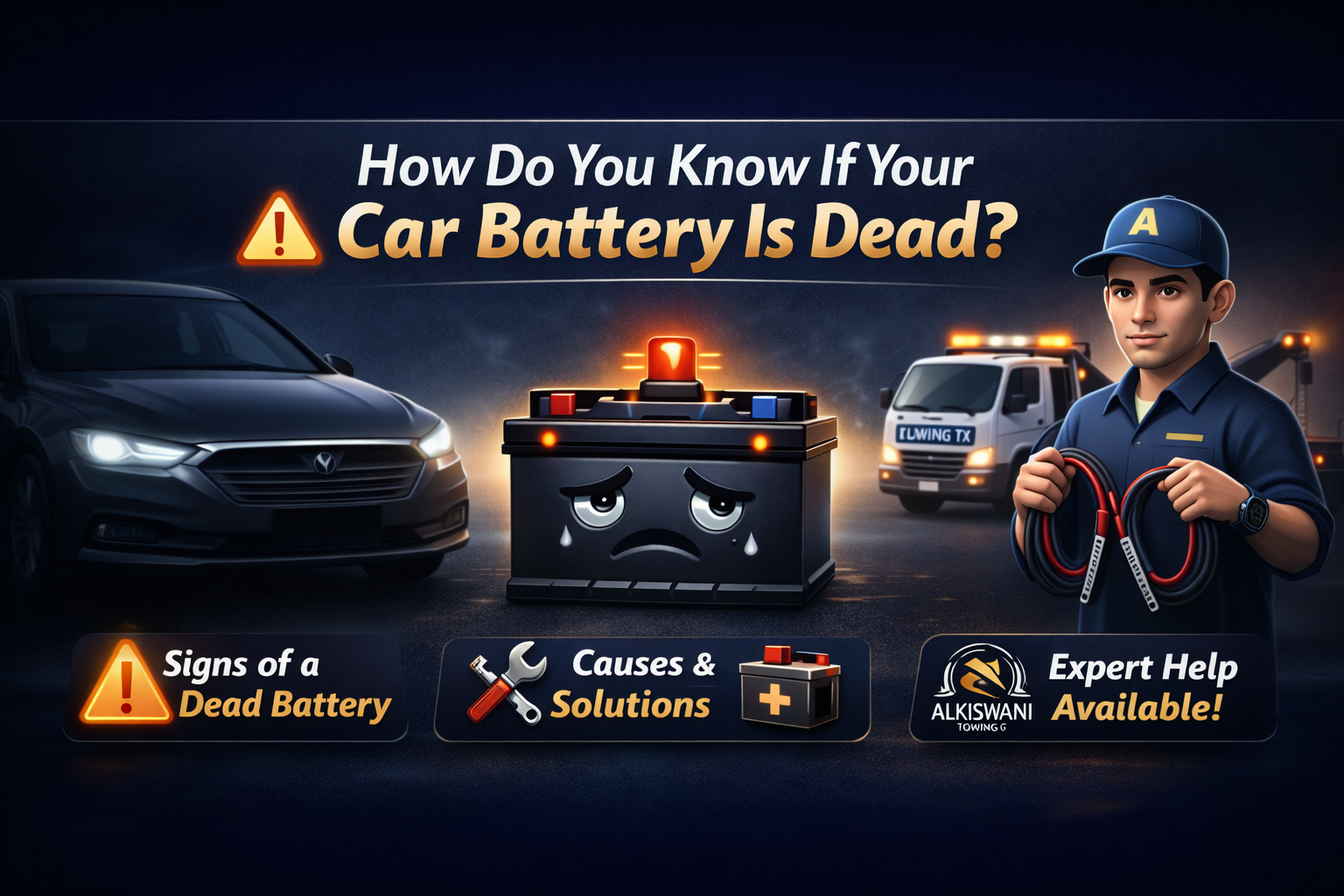
  • How Do You Know If Your Car Battery Is Dead? Signs, Causes, and What to Do

    How Do You Know If Your Car Battery Is Dead? Signs, Causes, and What to Do

    A dead car battery is one of the most common reasons vehicles fail to start, and it often happens at the worst possible time. Whether you’re heading to work, picking up kids, or stuck in a parking lot, knowing how to tell if a car battery is dead can save you time, stress, and money.

    In this guide, we’ll explain how do you know your battery is dead, the most common signs of a dead car battery, what causes it, and what to do if your car battery dies. We’ll also cover when it’s time to call a professional battery replacement service like Alkiswani Towing TX.

    How Do You Know If Your Car Battery Is Dead?

    Many drivers ask, “Is my car battery dead, or is it something else?” The good news is that a dead battery usually gives clear warning signs before it completely fails.

    Here are the most reliable ways to know if your vehicle battery is dead.

    Signs of a Dead Car Battery

    1. Engine Won’t Start or Cranks Slowly

    One of the most obvious bad car battery symptoms is when you turn the key and the engine doesn’t start—or cranks very slowly. If the engine sounds weak or struggles to turn over, it’s a strong sign of a dead battery.

    2. Clicking Sound When Turning the Key

    If you hear rapid clicking sounds when starting your car, it usually means the battery doesn’t have enough power to start the engine. This is one of the classic signs of a dead car battery.

    3. Dim Headlights and Interior Lights

    Another way to tell if a car battery is dead is by checking your lights. If your headlights, dashboard, or interior lights are dim or flickering, your vehicle battery may be dead or close to dying.

    4. Electrical Accessories Not Working

    Power windows, radio, infotainment system, or power locks not working properly are common bad car battery symptoms. A weak or dead battery can’t supply enough power to your car’s electronics.

    5. Battery Warning Light on Dashboard

    If the battery icon lights up on your dashboard, it’s a clear indicator of a battery or charging system issue. While it doesn’t always mean a completely dead car battery, it should never be ignored.

    How Can You Tell If a Car Battery Is Dead vs. Alternator Problems?

    Many drivers wonder, how can you tell if a car battery is dead or if the alternator is the problem?

    • If the car starts after a jump but dies again soon, the alternator may be faulty.
    • If the car won’t start even after a jump, you likely have a dead battery.
    • Flickering lights while driving often point to alternator issues rather than just a dead battery.

    A professional inspection can quickly confirm the issue.

    What Causes a Car Battery to Die?

    Understanding what causes a car battery to die can help prevent future problems.

    1. Age of the Battery

    Most car batteries last 3–5 years. If yours is older, a dead car battery is more likely.

    2. Leaving Lights or Accessories On

    Leaving headlights, interior lights, or charging devices plugged in overnight can drain the battery completely.

    3. Extreme Weather Conditions

    Very hot or extremely cold temperatures reduce battery efficiency and shorten battery life.

    4. Short Trips Only

    Frequent short trips don’t allow the battery to recharge fully, leading to a dead battery over time.

    5. Corroded or Loose Battery Terminals

    Corrosion on battery terminals prevents proper charging and power flow, causing bad car battery symptoms.

    How to Know If Car Battery Is Dead Using Simple Checks

    If you’re unsure and asking “how to know if car battery is dead?”, try these quick checks:

    • Turn on headlights: If they are very dim or don’t turn on, the battery is likely dead.
    • Try starting the car: Clicking or silence usually means a dead battery.
    • Check battery age: Over 4–5 years old? Replacement may be needed.
    • Jump-start test: If the car starts with a jump, your vehicle battery was dead.

    What to Do If Car Battery Dies

    If you’re stuck wondering what to do if car battery dies, follow these steps:

    1. Try a Jump Start

    Using jumper cables and another vehicle can temporarily get you going.

    2. Turn Off All Electronics

    Switch off lights, AC, and radio to reduce battery load.

    3. Drive to Recharge (If Possible)

    If the battery isn’t completely dead, a 20–30 minute drive may recharge it—but this is only a short-term fix.

    4. Call a Professional Battery Replacement Service

    If the battery is old or won’t hold a charge, replacement is the best solution.

    When to Replace a Dead Car Battery

    You should replace your battery if:

    • It repeatedly dies
    • It’s more than 4–5 years old
    • Jump-starting no longer works
    • You notice constant bad car battery symptoms

    For fast and reliable help, Alkiswani Towing TX offers professional battery replacement services. They can test your battery, replace it on the spot, and get you back on the road without the hassle of towing to a shop.

    Why Choose Alkiswani Towing TX for Battery Replacement?

    Alkiswani Towing TX is a trusted name for roadside assistance and battery replacement. Their experienced team provides:

    • On-site battery testing
    • Quick battery replacement
    • Reliable roadside support
    • Affordable and professional service

    If you’re dealing with a dead car battery, they are a dependable solution when you need immediate help.

    FAQs – Dead Car Battery

    How do you know if your battery is dead or just low?

    If the car starts after a jump but dies again soon, it may be low or failing. If it won’t start at all, it’s likely a dead battery.

    Can a dead car battery recharge itself?

    No. Once fully dead, a battery usually needs a jump-start or replacement.

    How long does it take for a car battery to die?

    A battery can die overnight if lights are left on, or gradually over months due to age or poor charging.

    Is it safe to drive with a weak battery?

    A weak battery can leave you stranded anytime. Replacement is recommended.

    How often should I replace my car battery?

    Most batteries should be replaced every 3–5 years.

    Final Thoughts

    Knowing how do you know if your car battery is dead helps you avoid unexpected breakdowns and costly delays. From slow engine cranks to dim lights, the signs of a dead car battery are usually clear if you know what to look for.

    If you suspect your vehicle battery is dead, don’t wait until you’re stranded. For fast, professional battery replacement and roadside assistance, contact Alkiswani Towing TX and get back on the road with confidence.

  • How Much Cost Is a Tow in Houston

    How Much Cost Is a Tow in Houston

    How Much Cost Is a Tow in Houston

    Need a cheap towing service in Houston, Texas? Call +1 (713) 359-6846 for fast help from Alkiswani Towingtx. If your car stops, breaks, or gets in an accident, you may ask: how much cost is a tow in Houston? The cost is not the same for everyone. It depends on your car and what help you need.


    How Much Does Towing Cost in Houston?

    Towing cost can change. Small cars, big cars, short trips, long trips, or accident towing all have different costs. Alkiswani Towingtx always tells you clearly so you understand the bill.


    Are There 24/7 Towing Services in Houston?

    Yes. Car trouble can happen anytime. Alkiswani Towingtx gives 24/7 towing in Houston. You can call day or night, weekday or weekend.


    How Do I Find a Reliable Towing Service in Houston?

    A good towing company should be local, quick, and trusted. Alkiswani Towingtx is known in Houston for fast help, safe service, and professional drivers.


    What Types of Vehicles Can Be Towed?

    Alkiswani Towingtx can tow many cars and trucks. We also give roadside help like:

    • Light Duty Towing – Cars, SUVs, and small trucks.
    • Off Road Recovery – Car stuck in mud, sand, or grass.
    • Accident Recovery – Towing after a crash.
    • Winchouts – Pulling a car from a ditch.
    • Battery Services – Help if your battery is dead.
    • Jumpstarts – Start a car that will not start.
    • Lockouts – If keys are locked in the car.
    • Tire Changes – Help with a flat tire.
    • Fuel Delivery – Bring fuel if you run out.

    How Long Does It Take for a Tow Truck to Arrive?

    It depends on traffic and where you are. But Alkiswani Towingtx always tries to come fast. Being local in Houston helps us arrive quicker.


    What Should I Do While Waiting for a Tow Truck?

    Turn on your hazard lights. If possible, move your car to the side. Stay inside the car if it is not safe outside. Alkiswani Towingtx will come to you soon.


    Why Towing Fees Can Feel Like a Shock

    Many people feel surprised when they see the bill. This is because they do not know about the fees. Alkiswani Towingtx explains everything so you understand.


    Common Fees on a Southeast Houston Tow Invoice

    Common fees can include:

    • Service call fee
    • Hook-up fee
    • Mileage fee
    • Extra fee if the car is stuck

    Why Towing Fees Add Up in Southeast Houston

    Towing costs can go higher if extra work is needed, like accident recovery, winchouts, or long trips. Alkiswani Towingtx keeps costs fair and clear.


    Refer a Friend in Distress and He Will Get Price Reduced by 15%

    If you tell a friend about us, he will get 15% off. This helps more people in Houston get low-cost and safe towing.


    Final Thoughts

    If you ask how much cost is a tow in Houston, the answer is that it depends on your car and service. The best way is to call Alkiswani Towingtx at +1 (713) 359-6846 for quick and safe towing in Houston.